Audecy Electronics Manufacturing

Manufacturing & Assembly

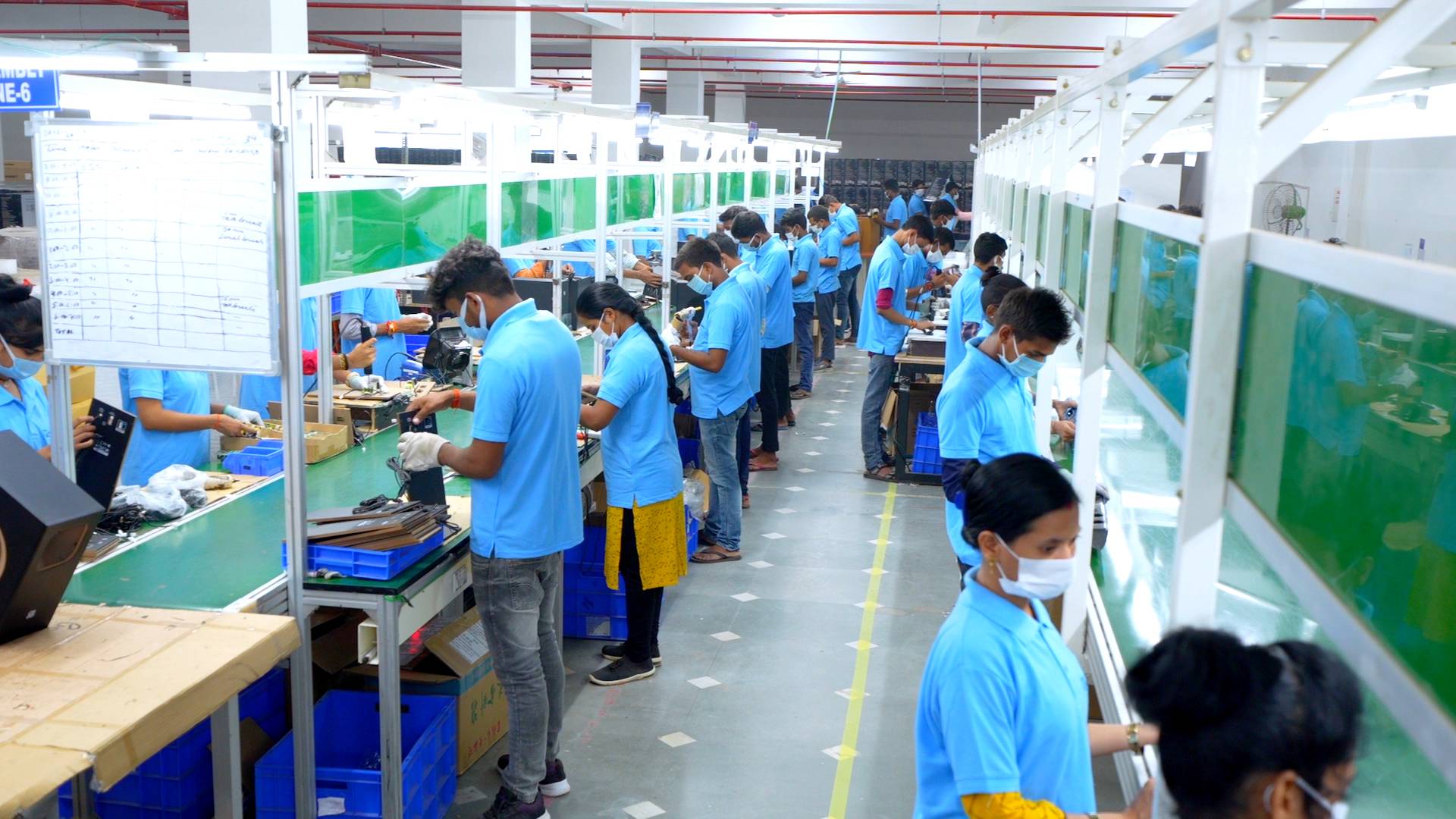
Audecy manufactures and assembles audio products through a controlled production flow that connects planning, electronics preparation, cabinet assembly, program-specific fixtures, in-process checks, end-of-line test stations, packing, and dispatch readiness. The objective is repeatable output: products that are built consistently, inspected clearly, and prepared for scale.

Production Planning

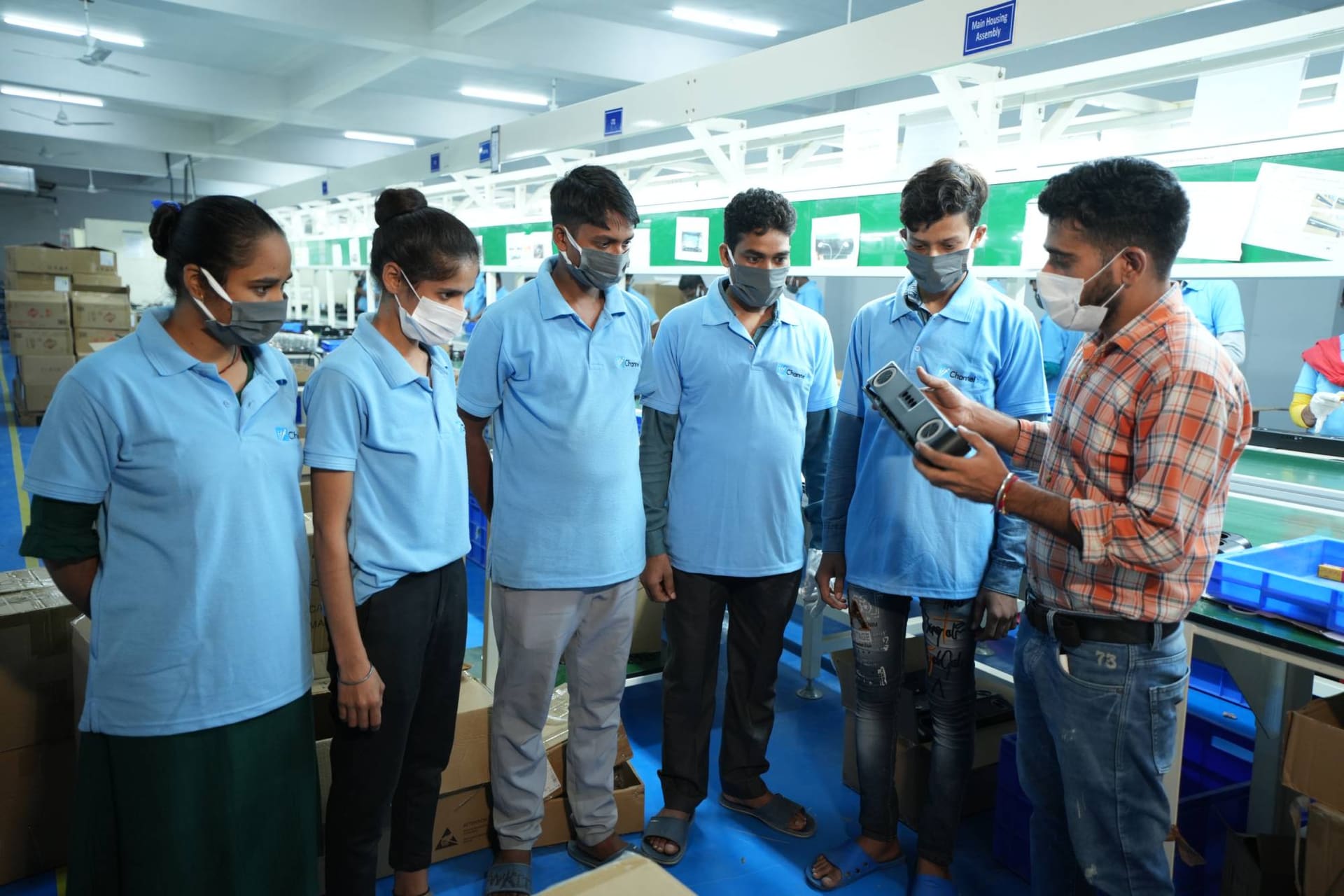
Manufacturing begins before the first unit reaches the line. Audecy reviews the approved design, bill of materials, component status, assembly method, fixture needs, inspection points, packaging plan, and delivery schedule to create a practical build plan.

The planning stage connects development and factory execution. It defines the build sequence, operator checkpoints, material flow, rework path, test coverage, documentation needs, and the information that must move between production, quality, stores, and dispatch.

This preparation helps keep audio programs controlled as they move from pilot builds into regular production. It also gives teams a shared understanding of what has to be ready before the line starts.

  • Production flow planning from component receipt through packing and dispatch.
  • Line readiness checks for material availability, tooling, fixtures, work instructions, and test stations.
  • Pilot build feedback loops before wider production release.
  • Program-specific operator guidance, fixtures, and quality checkpoints for soundbars, speakers, and subassemblies.
  • Coordination between production, engineering, sourcing, quality, stores, and packaging teams.

Readiness

The line plan confirms materials, fixtures, instructions, test coverage, and packing needs.

Visibility

Build issues can be traced back to material, process, design, or inspection causes.

Continuity

Pilot findings are carried into the regular production method before scale-up.
Electronics Manufacturing

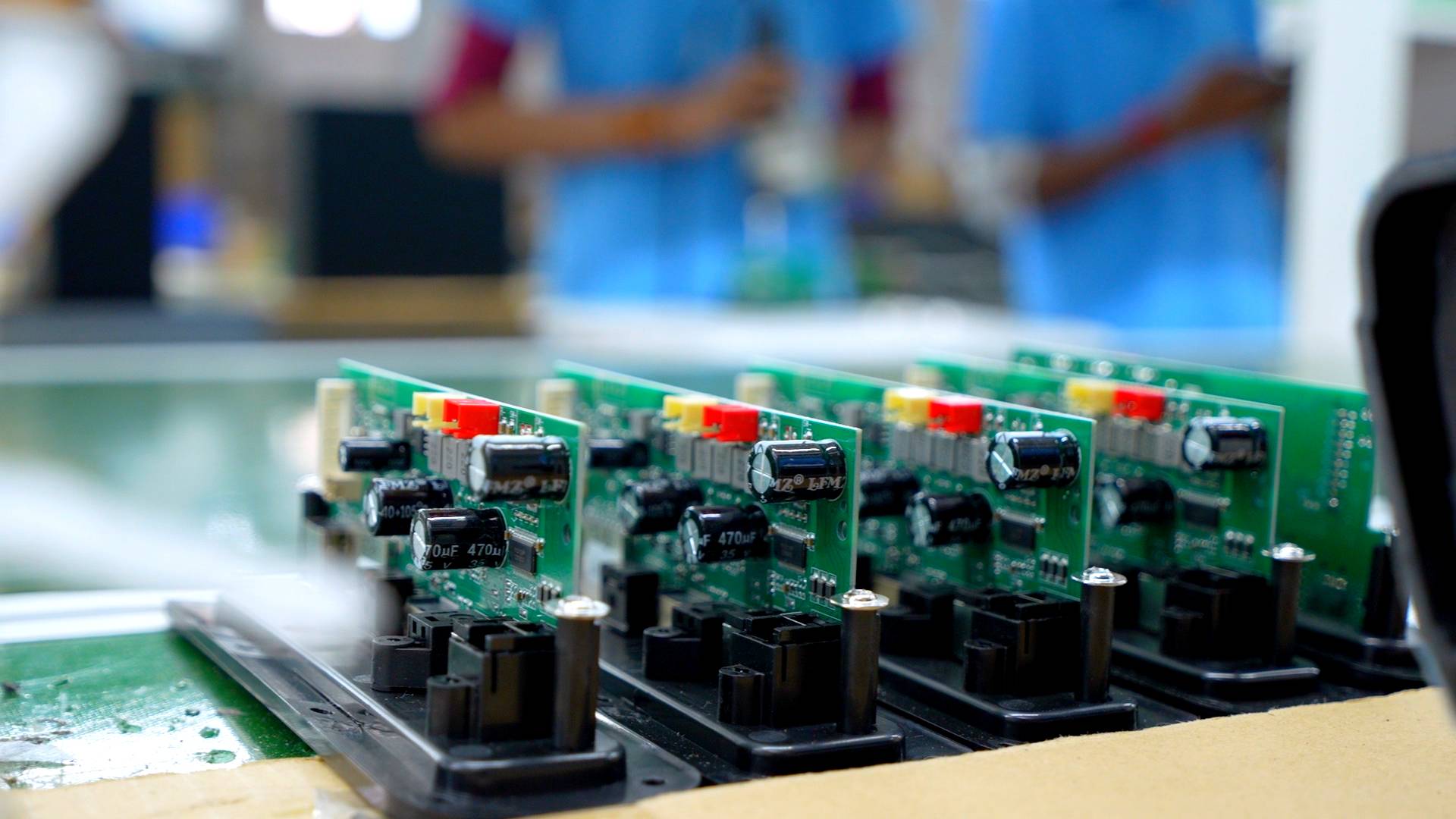
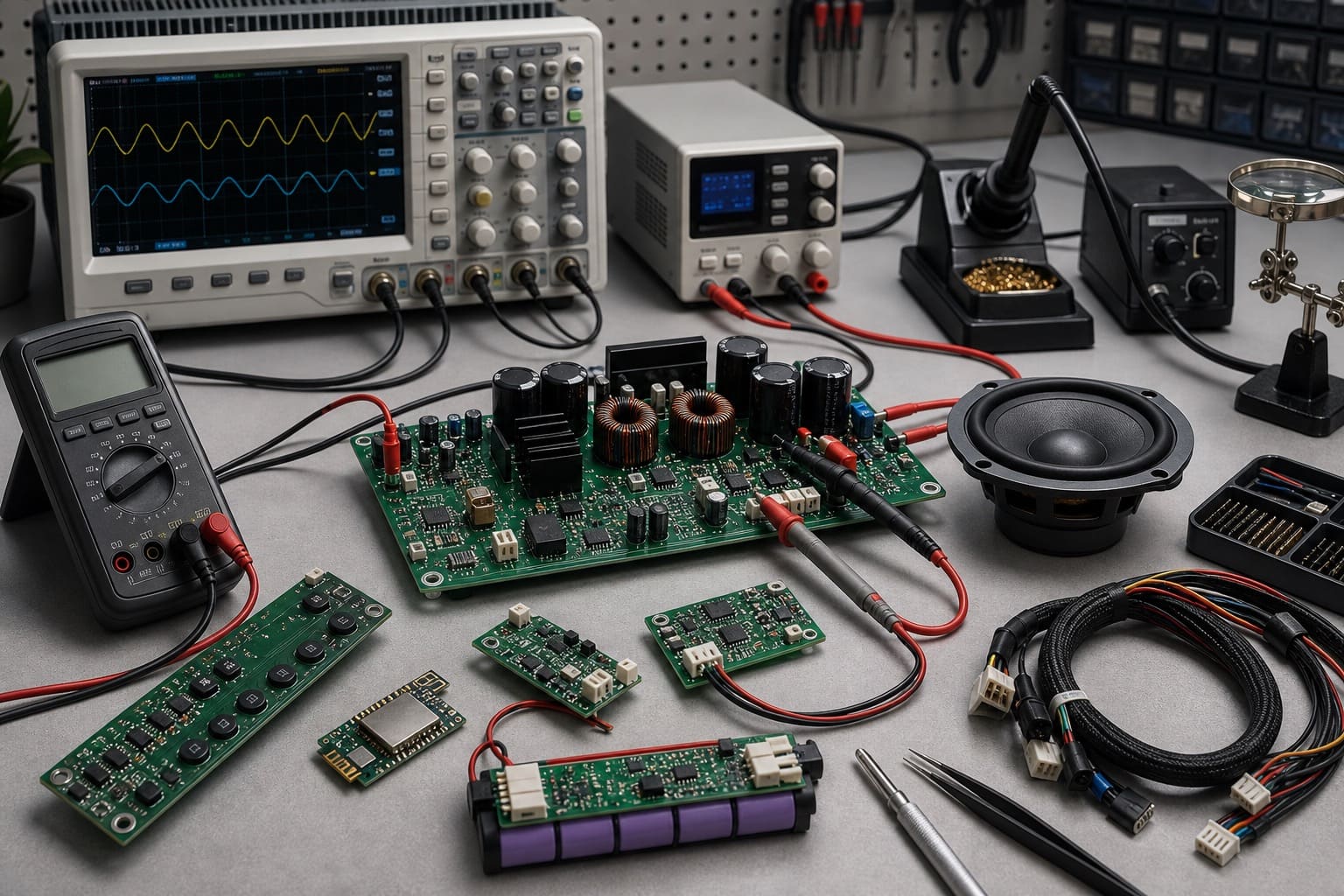
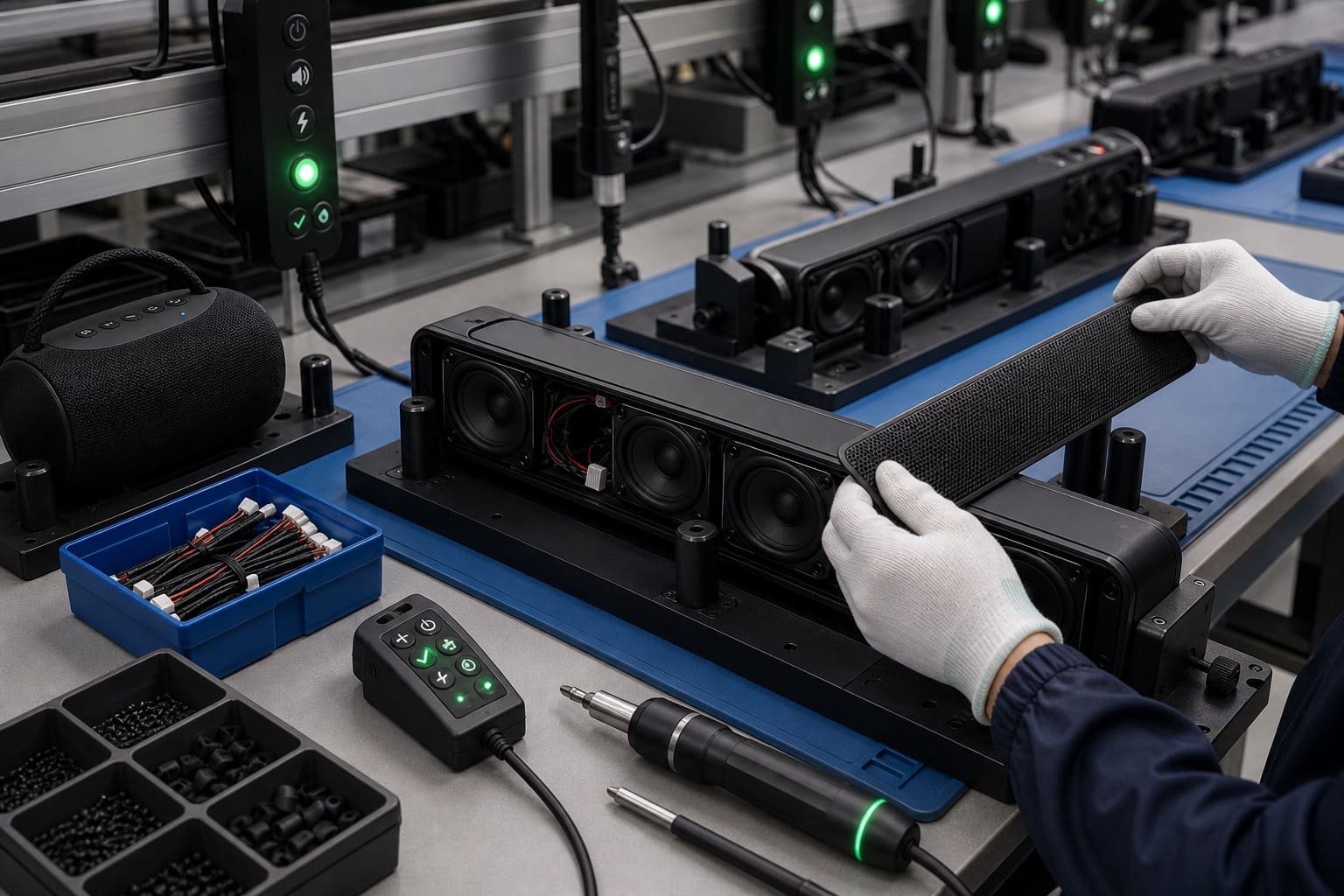
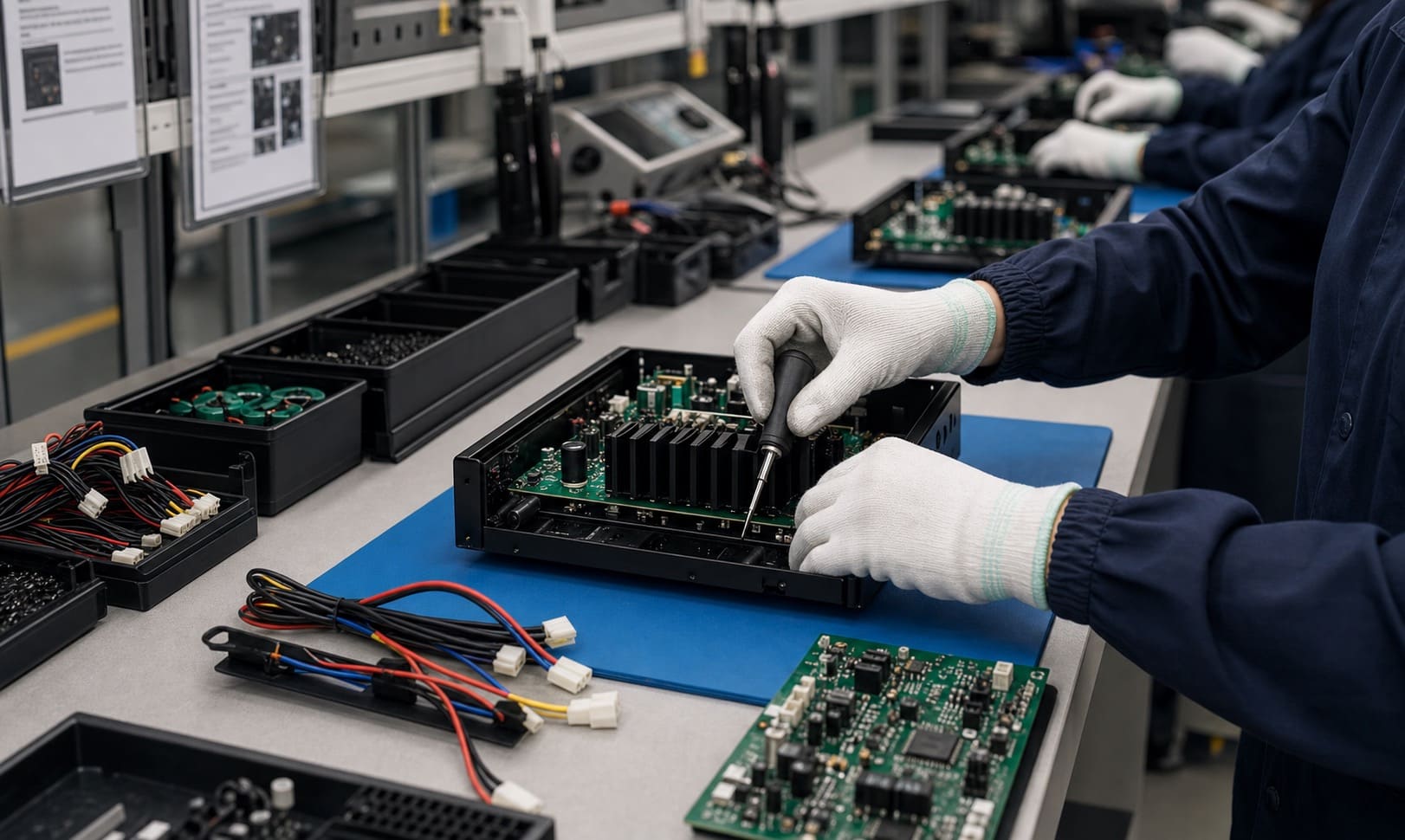
Audio performance depends heavily on consistent electronics. Audecy supports the preparation and integration of amplifier boards, control boards, wireless modules, power systems, battery packs, cable harnesses, connectors, and related electronic subassemblies for audio products.

Electronics manufacturing is planned around repeatable handling and clear inspection points. Operators need stable work instructions, fixture support, correct wiring paths, reliable connector engagement, and enough test access to confirm that each subassembly is ready before it moves forward.

This reduces the chance of hidden defects being discovered late in the build. It also supports cleaner rework if an issue is found during functional testing.

  • PCB and electronic subassembly preparation for soundbars, speakers, and powered audio systems.
  • Harness, connector, power, battery, control, and amplifier integration support.
  • Operator checkpoints for solder joints, connector seating, polarity, cable routing, and visual defects.
  • Functional access points that support calibration, diagnosis, and rework where needed.

Handling

Electronic assemblies are prepared with clear station flow and operator guidance.

Inspection

Visual and functional checks are positioned before subassemblies become harder to access.

Repairability

Rework paths are considered so failures can be isolated without unnecessary scrap.

Audio Product Assembly

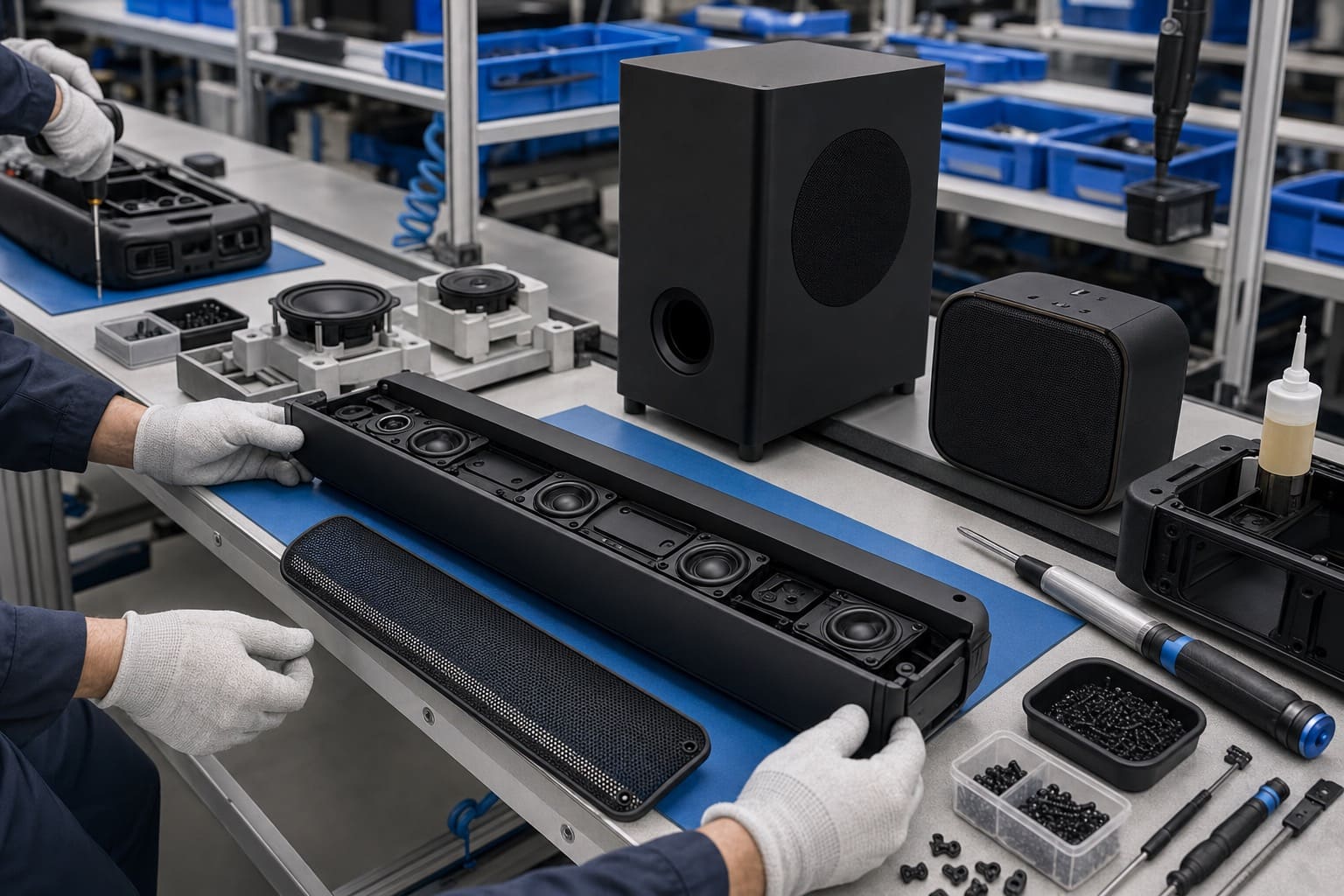
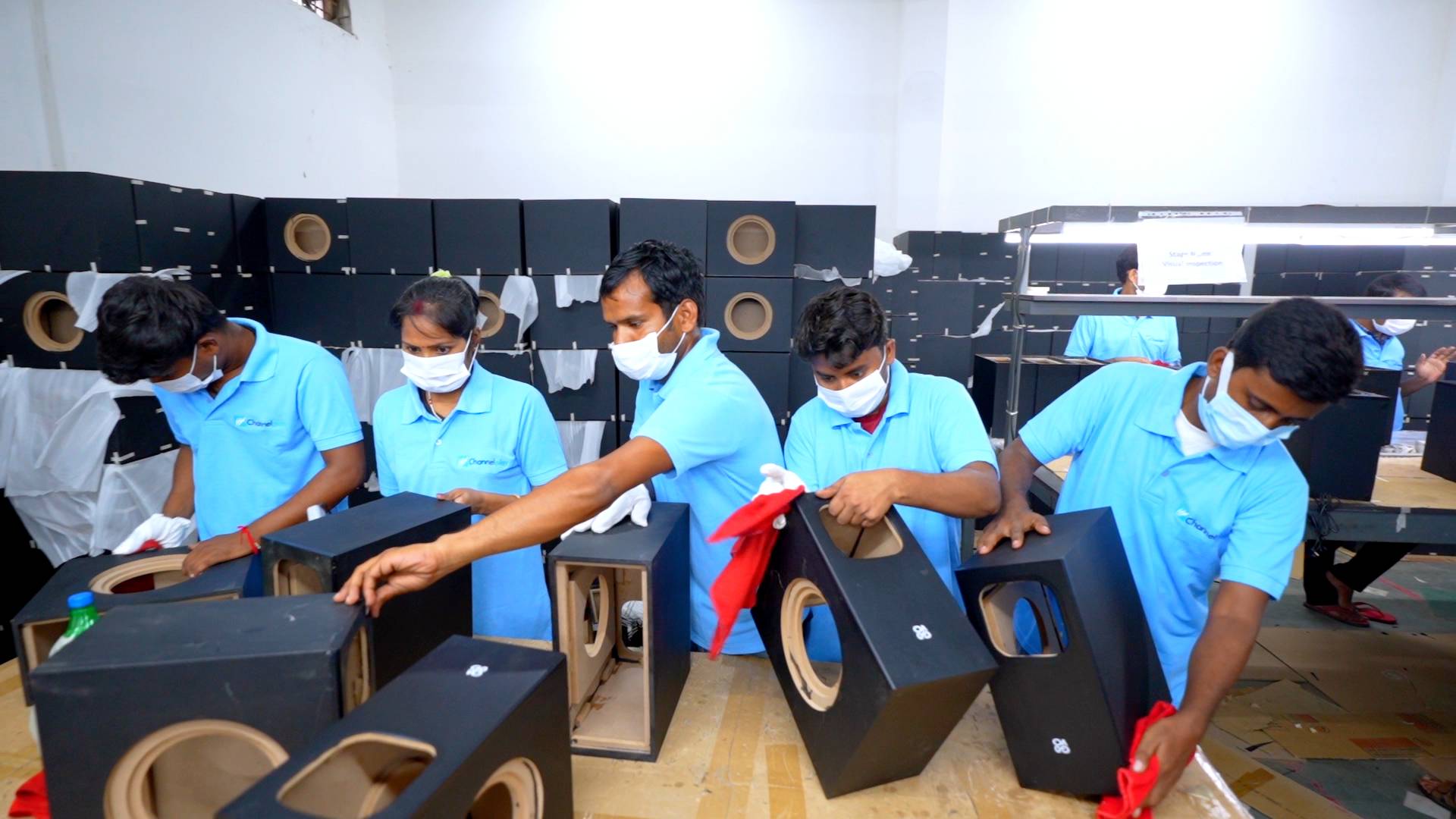
Assembly brings the mechanical, acoustic, and electronic systems together. For audio products, that means more than fastening parts: cabinet sealing, driver mounting, grille placement, port alignment, wire routing, damping material, button feel, rubber feet, trim fit, and final cosmetic presentation all influence the finished product.

Audecy structures assembly work so operators can build consistently and inspectors can verify important details at the right time. The production method accounts for fixture support, torque control, adhesive or gasket placement, cable strain relief, subassembly sequence, and protection of visible surfaces.

The same approach applies across soundbars, subwoofers, speaker towers, party speakers, portable speakers, and accessory kits. The product category changes, but the focus remains controlled assembly and repeatable quality.

  • Cabinet, grille, driver, port, wiring, controls, trim, and accessory assembly.
  • Fixture-supported workstations for repeatable fit, alignment, and surface protection.
  • Assembly checks for cable routing, cabinet sealing, fasteners, button movement, and visual finish.
  • Category-specific handling for soundbars, subwoofers, tower speakers, portable speakers, and party speakers.

Acoustic Integrity

Driver, grille, seal, port, and cabinet details are controlled because they affect sound quality.

Cosmetics

Visible finishes and touchpoints are protected through assembly and inspection.

Line Flow

Subassemblies are sequenced so operators can build efficiently without hiding defects.

In-process Controls

In-process controls catch problems while products are still accessible for correction. Audecy places checkpoints through the build sequence so teams can identify material issues, assembly errors, cosmetic defects, wiring problems, sound leakage risks, and functional concerns before the product reaches final testing.

The controls are designed to be practical for the factory floor. They combine operator self-checks, quality inspections, visual references, status segregation, defect documentation, and defined rework routes.

For audio products, this stage is critical because small assembly deviations can create later failures. Loose wires, poor seals, misaligned grilles, incorrect fasteners, or inconsistent button movement can all lead to performance, cosmetic, or customer experience issues.

  • Station-level checks for fit, wiring, fasteners, seals, buttons, grilles, labels, and cosmetic condition.
  • Clear segregation and documentation for non-conforming material or work-in-progress units.
  • Rework and reinspection paths that prevent unresolved issues from moving downstream.
  • Inspection feedback shared with production and engineering teams for process correction.

Containment

Issues are isolated before they can move into final test, packing, or dispatch.

Correction

Rework is followed by reinspection so the line does not rely on informal fixes.

Learning

Repeated findings are fed back into work instructions, fixtures, or supplier actions.

End-of-line Testing

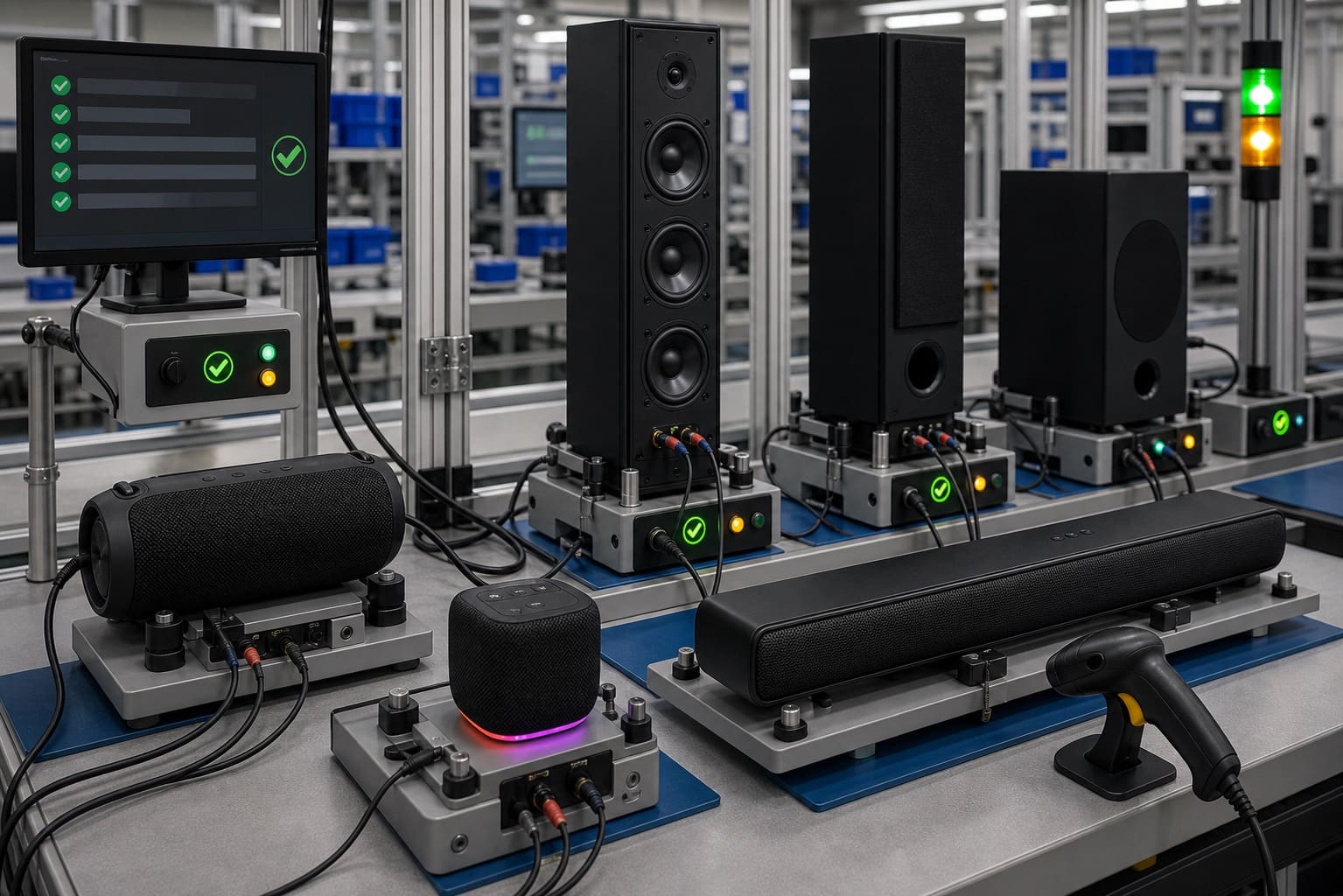
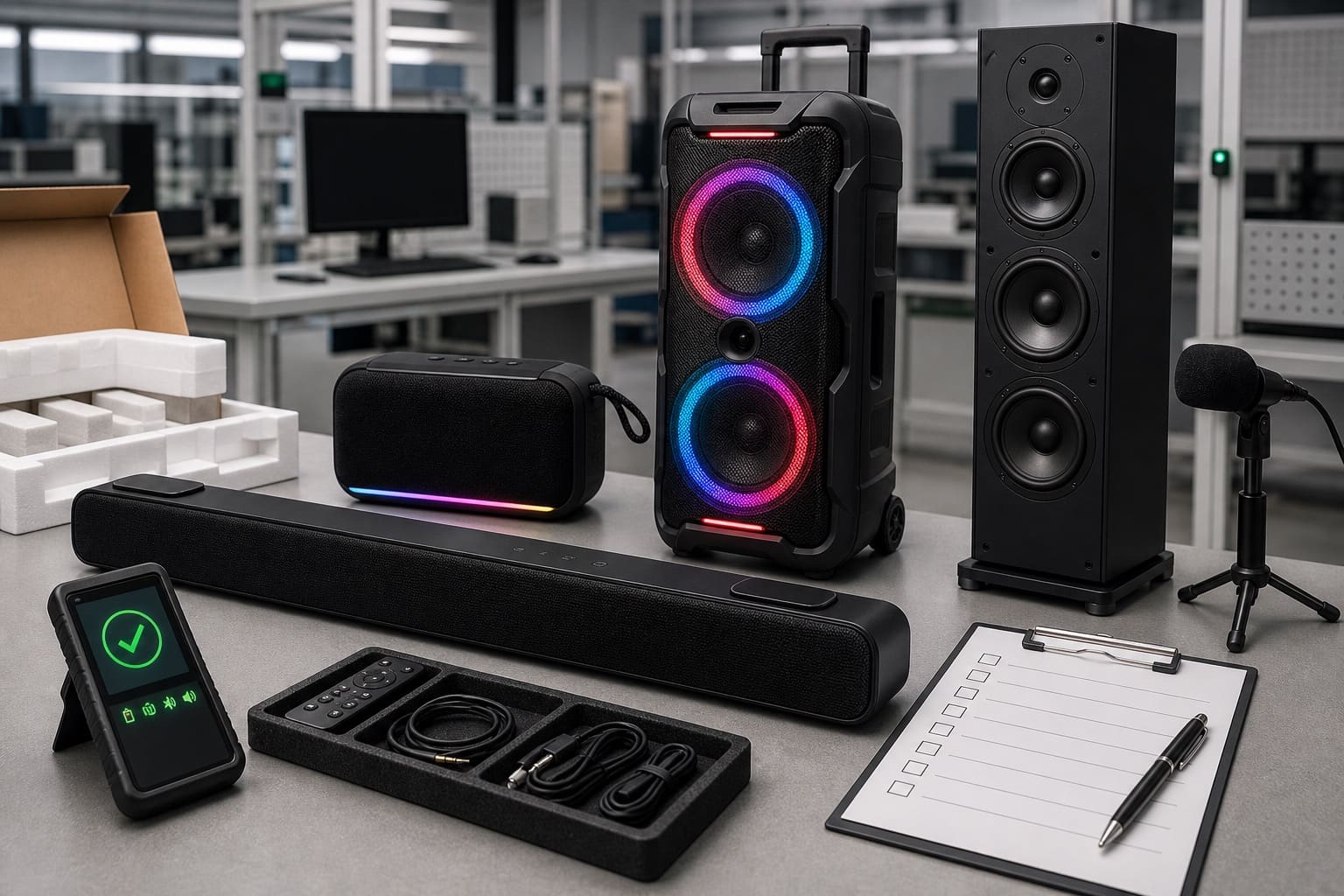
End-of-line testing confirms that the finished product performs as expected before it moves into packing. Audecy's audio production flow includes functional checks that can cover power-up behavior, audio output, controls, inputs, connectivity, indicator behavior, accessories, and cosmetic condition.

Testing requirements are shaped by the product category. A soundbar program may need checks for channel output, subwoofer pairing, remote control response, port behavior, input switching, and cabinet noise. A portable speaker program may require checks for charging, battery indication, buttons, wireless pairing, microphone behavior, and enclosure finish.

The goal is a clear release decision. Products that pass can move forward, while failures are documented, routed for diagnosis or rework, and checked again before release.

  • Functional checks for power, controls, audio output, source switching, connectivity, indicators, and accessories.
  • Audio-specific checks for channel output, unwanted noise, vibration, rattles, and pairing behavior.
  • Defect documentation and rework routing for units that do not meet release criteria.
  • Final verification before packing to reduce avoidable field issues and returns.

Decision

Each finished unit has a clear pass, rework, or hold path based on release criteria.

Coverage

Tests are matched to the actual functions and risk areas of the product category.

Traceability

Failures are documented so recurring causes can be reviewed and corrected.

Packing & Dispatch Readiness

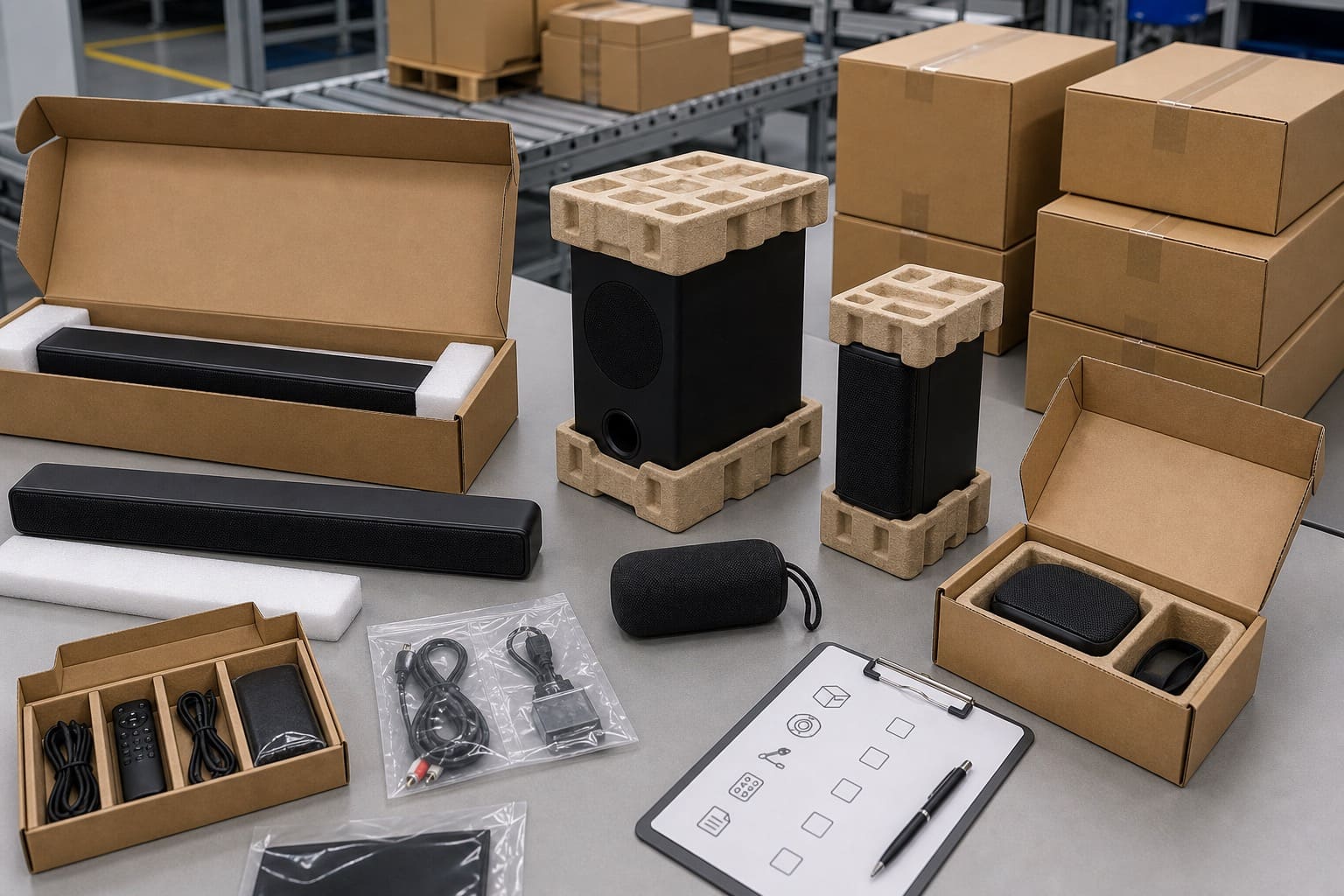
Packing is the final manufacturing stage customers will experience first. Audecy treats packing as a controlled process that protects the product, confirms accessory completeness, supports traceability, and prepares cartons for storage or shipment.

The packing method covers product cleaning, protective wrapping, inserts, accessory kits, remote controls, adapters, cables, manuals, labels, outer cartons, and final inspection status. It also checks whether the packaging method can be repeated without slowing dispatch or damaging visible surfaces.

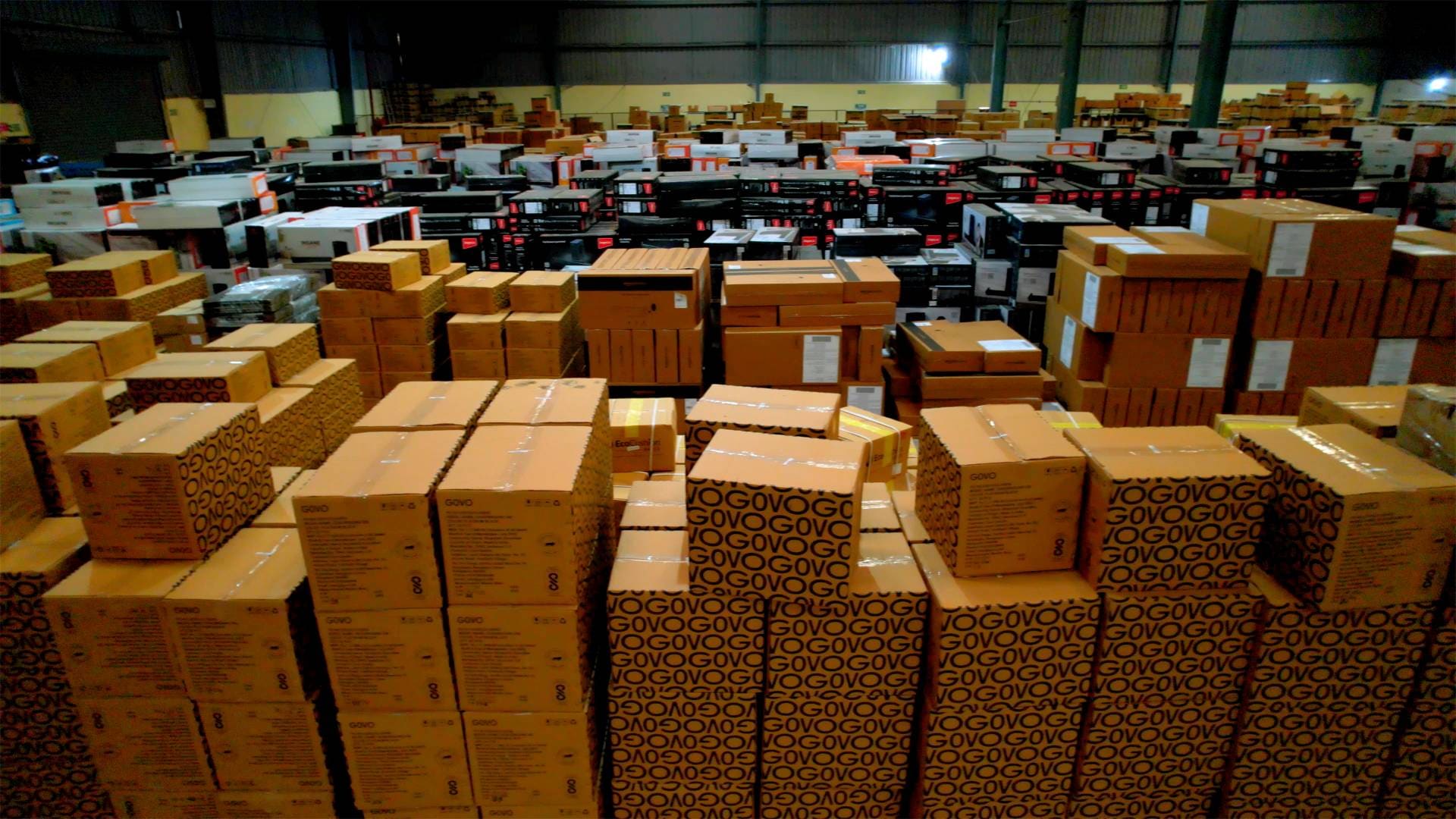
Dispatch readiness brings together the product, documentation, packaging, carton condition, and release status so the finished goods flow is controlled before the product leaves the facility.

  • Packing controls for products, accessories, documents, labels, cartons, inserts, and protective materials.
  • Accessory completeness checks for remotes, adapters, cables, mounts, manuals, and product-specific items.
  • Carton and dispatch checks for release status, handling condition, and shipment readiness.
  • Feedback from packing and dispatch used to refine packaging structure and work instructions.

Complete Pack

Products are checked with the correct accessory set and documentation before carton closure.

Protection

Packaging is reviewed for handling, storage, ecommerce, and retail needs.

Release

Packed goods are tied back to inspection status before they move to dispatch.

Ready to build with Audecy?

Let’s align on specifications, timelines, and quality goals for your next audio program.

Explore audio product programs — soundbars, Bluetooth speakers, tower speakers, and party speakers.

Review the technology capabilities behind production visibility, traceability, quality gates, and dispatch control.

Start a project