
Programs can be planned for compact everyday use, higher-output portable listening, and feature-rich retail ranges.
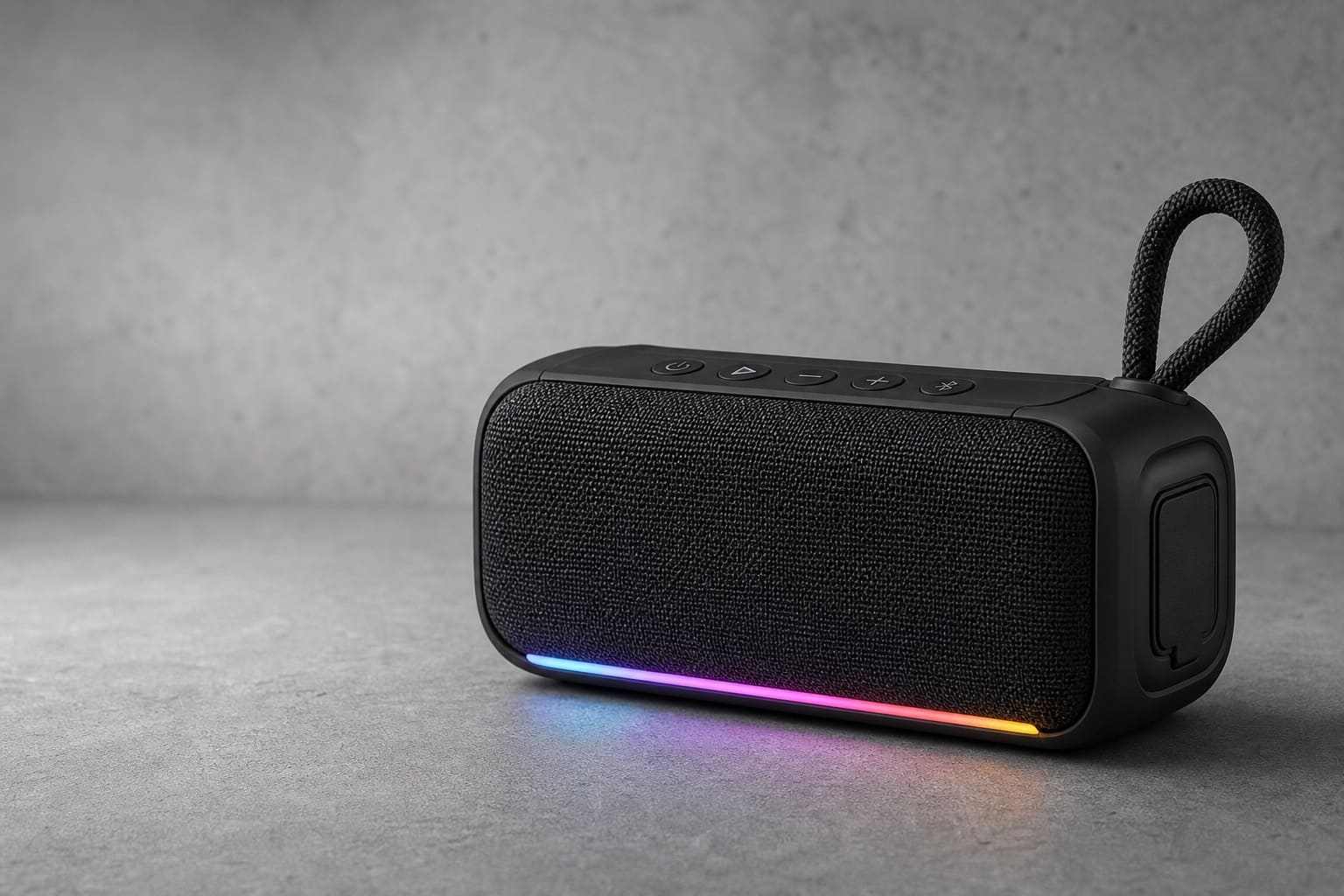
Product scope
Built for brand-ready home audio programs
A Bluetooth speaker manufacturer must balance sound quality, battery life, durability, and strong industrial design in a small footprint. Audecy supports the full product journey from concept and acoustic architecture through mechanical sealing, electronics integration, assembly, and line testing.
Brands can work with Audecy on compact personal speakers, rugged outdoor designs, multi-driver portable systems, and wireless models with TWS pairing or lighting accents. Each program is developed around the target use case, desired finish, performance requirement, and production volume.
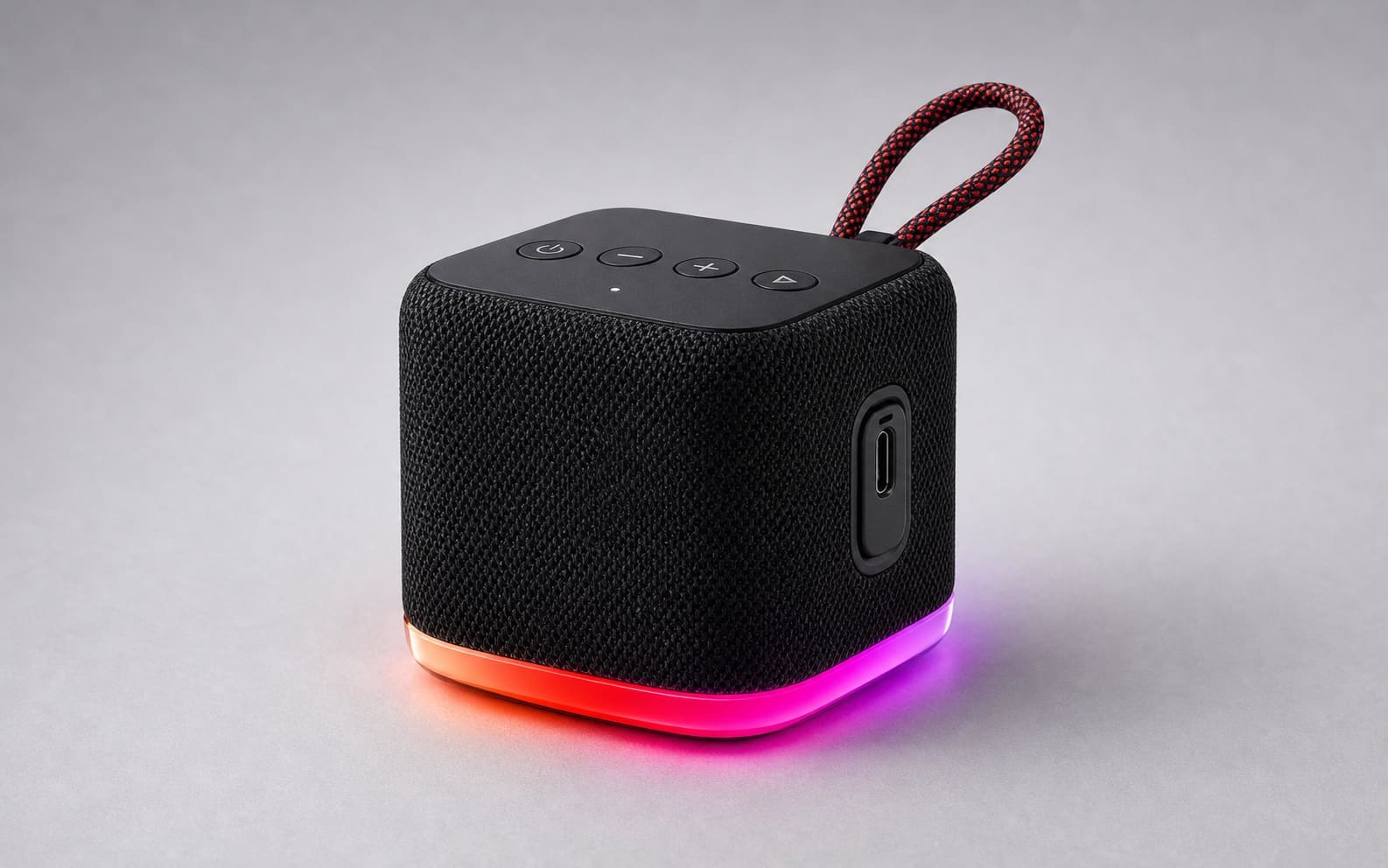
Audecy's recent portable speaker work includes 25W-class output, large single-driver architecture, Type-C charging, fast-charge targets around 1.5 hours, compact cubic enclosures, RGB lighting, and TWS mode. These details give Audecy practical experience with both acoustic output and the consumer-facing feature mix expected in modern wireless speakers.
Battery sizing, charging design, fast-charge targets, and power behavior are aligned to the product brief.
Lighting, wireless pairing, control prompts, and stereo-link behavior can be configured around the product concept.
Bluetooth 5.x, TWS pairing, USB-C charging, prompts, and control behavior can be configured.
Portable Acoustics
Small cabinets with controlled bass and clear output
A portable speaker has limited internal volume, so every mechanical and acoustic decision matters. Audecy can work on driver selection, passive-radiator behavior, enclosure stiffness, damping, amplifier matching, and DSP tuning to create a balanced output for the product size.
The tuning process considers near-field listening, outdoor use, bass expectations, voice clarity, and distortion control at higher levels. For compact 25W-class speakers, driver size, cabinet geometry, bass loading, LED placement, and thermal behavior are reviewed together so the product feels purposeful rather than generic.
- Full-range driver and passive-radiator matching for the target cabinet size
- DSP tuning for bass extension, vocal clarity, limiter behavior, and loudness balance
- Cabinet reviews for rattle control, seal consistency, and grille behavior
- Acoustic validation to reduce unit-to-unit output variation
Battery And Wireless
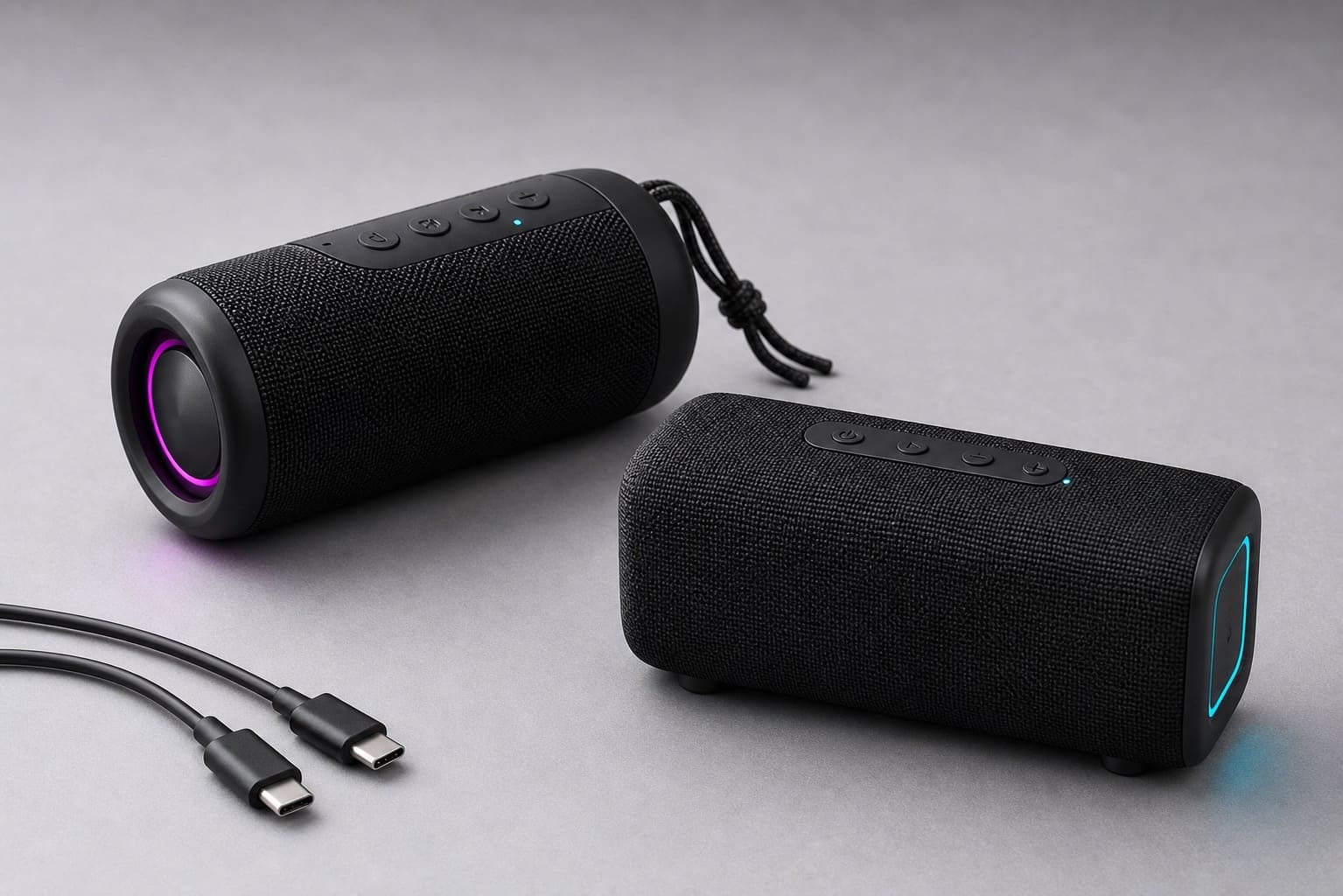
Power, charging, and RF behavior built into the product plan
Battery life is not just a cell-capacity decision. It depends on amplifier efficiency, standby behavior, charge management, LED use, volume curves, and thermal limits. Audecy reviews these constraints together so the product can meet its playback and charging targets while remaining safe and practical to manufacture.
Wireless performance is validated through antenna placement, board layout, enclosure material choices, pairing behavior, call-mic performance, and range checks. This work reduces late-stage surprises after the industrial design is already locked.
- Battery-pack, fast-charge, USB-C, and protection-circuit integration
- Antenna placement and RF checks for stable Bluetooth performance
- Control behavior for pairing, TWS, prompts, calls, RGB lighting, and standby
- Thermal and power validation for sustained playback at target output
Mechanical Design
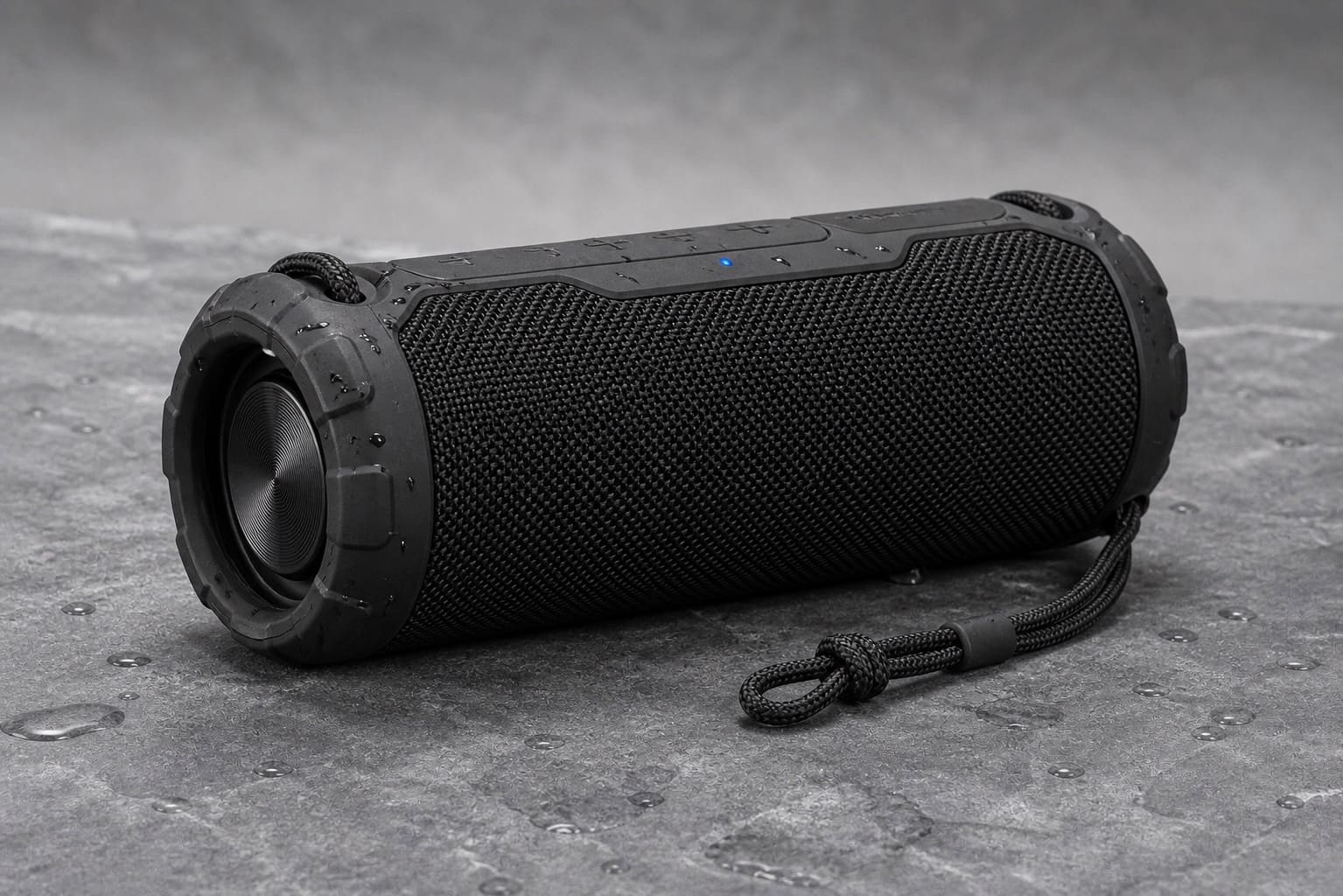
Durable construction for daily carry and outdoor use
Portable speaker buyers expect products that can be handled, moved, charged, packed, and used repeatedly without feeling fragile. Audecy can support material selection, shock-resistant construction, sealing approach, port protection, lanyard or handle design, grille construction, and finish durability.
Manufacturing planning includes how seals are assembled, how adhesives or gaskets are controlled, how buttons are tested, and how finished units are inspected for cosmetic and functional consistency.
- Rubber, fabric, plastic, grille, and trim options for different price bands
- Sealing strategy for ports, buttons, passive radiators, and cabinet joints
- Drop, vibration, button-life, and transport checks based on the product use case
- Cosmetic inspection for color, texture, part fit, and finish uniformity
Production workflow
From product brief to packed finished goods
Use-case and feature definition
Define product size, output, battery target, durability level, controls, lighting, wireless behavior, and accessory expectations.
Acoustic and mechanical prototype
Build and refine cabinet volume, driver layout, passive radiator placement, sealing details, finish, and tuning direction.
Electronics and battery validation
Verify charging, protection, amplifier behavior, Bluetooth performance, prompt logic, microphone behavior, and standby usage.
Production readiness
Prepare assembly sequence, sealing checks, line testing, burn-in, packing, and reliability gates before mass output.
Quality validation
Checks that matter before shipment
Each product category has its own risk areas, so validation is planned around the acoustic, electrical, mechanical, cosmetic, and packing requirements of the program.
- Battery charging, discharge, protection, and playback-duration validation.
- Bluetooth pairing, range, reconnection, TWS behavior, RGB lighting, and control-button checks.
- Acoustic testing for output, distortion, bass behavior, and unit consistency.
- Durability checks for drop, vibration, button life, port cover fit, and sealing.
- Final inspection for finish quality, accessories, labeling, and packaging condition.
Product customization
Adapt the platform to your brand and market
Form factor
Compact desk speakers, rugged outdoor units, cylindrical formats, handle-based designs, or premium fabric finishes.
Feature mix
TWS pairing, USB-C charging, fast-charge targets, voice prompts, microphone support, RGB lighting, app-compatible behavior, and call controls.
Material and finish
Fabric wraps, rubberized shells, metal grilles, colorways, strap details, surface textures, and retail-ready packaging.
FAQs
Bluetooth Speakers manufacturing — common questions
What output and battery options are available for Bluetooth speakers?
Programs can be planned around compact everyday use up to 25W-class output, with battery sizing, USB-C charging, and fast-charge targets aligned to the product brief and runtime goals.
Which features can be added — TWS, RGB lighting, or rugged sealing?
Bluetooth 5.x, TWS stereo pairing, RGB lighting, voice prompts, microphone support, and water-resistant or rugged construction can be configured around the intended use case.
Can Audecy manufacture wireless speakers for outdoor and travel use?
Yes. Portable wireless speaker programs can be planned for outdoor or travel use with sealed ports, rubberized shells, strap or handle details, battery protection, Bluetooth range checks, enclosure durability, and packaging for retail or ecommerce handling.
Do you make private-label and outdoor or rugged speaker designs?
Yes. Audecy supports ODM, OEM, and private-label portable speakers, including rugged outdoor formats with sealed ports, rubberized shells, and strap or handle details.
How are portable speakers tested for reliability?
Validation can include drop, vibration, and button-life checks, battery charge, discharge, and protection testing, Bluetooth range and reconnection, and acoustic consistency before packing.
Related home audio programs
Explore adjacent product capabilities
Every Bluetooth speaker program is supported by our audio product development, manufacturing and assembly, and quality assurance capabilities.
Ready to discuss a Bluetooth speaker program?
Share the product target, feature mix, output expectations, finish direction, and launch timeline. Audecy can help translate the brief into a manufacturable plan.