
Driver architecture can be planned around target output, cabinet size, and market price band.
Product scope
Built for brand-ready home audio programs
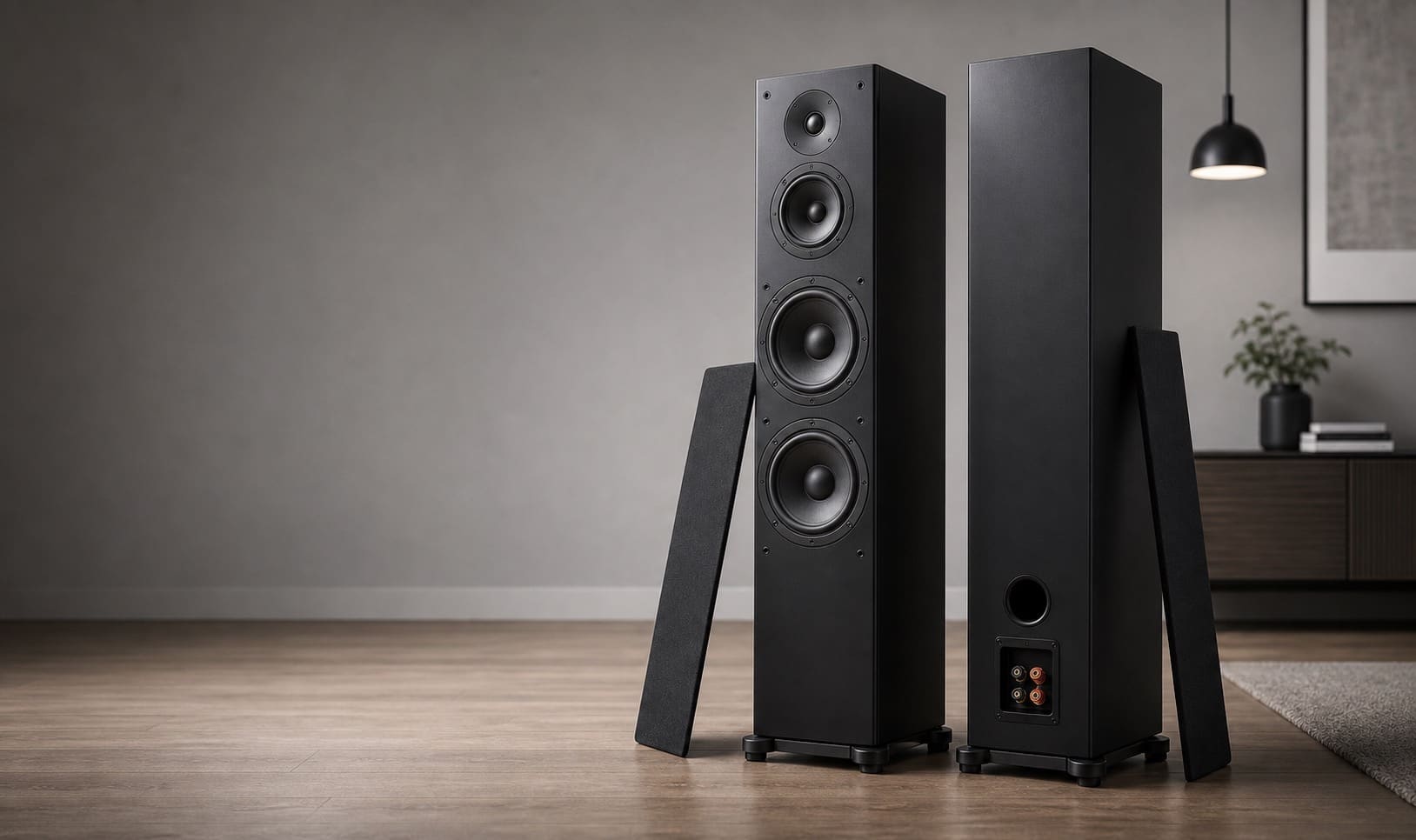
Tower speakers are highly visible products where sound quality, cabinet finish, and build consistency all influence buyer perception. Audecy supports floor-standing speaker programs that need strong acoustic output, stable cabinet construction, controlled resonance, and premium visual execution.
Our work can cover 2-way and 3-way layouts, driver selection, crossover planning, enclosure bracing, damping, terminal design, grille construction, finish selection, assembly process design, and acoustic validation. The goal is a product that performs consistently and looks at home in a premium living space.
MDF, bracing, damping, port tuning, and finish selection are reviewed together.
Crossover behavior, dispersion, impedance, and tonal balance are aligned during development.
Veneer, paint, gloss, grille, feet, and terminal details can be customized for the range.
Cabinet Engineering
A stable enclosure for room-filling sound
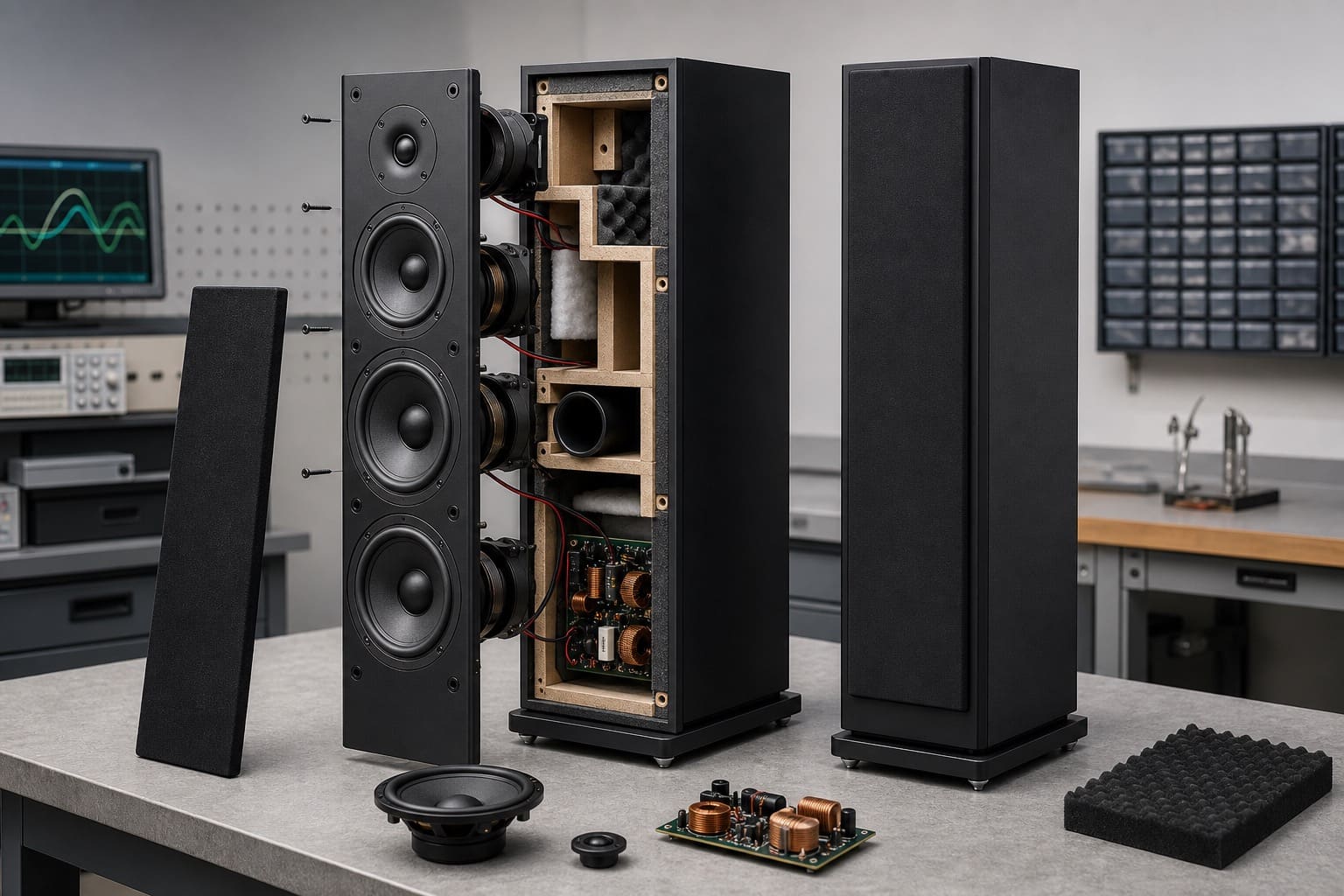
A tower speaker cabinet must control resonance while providing the internal volume required for low-frequency performance. Audecy reviews wall thickness, bracing, damping, port geometry, driver placement, and baffle design so the cabinet supports the acoustic target.
The same choices also affect manufacturing. Cabinet fabrication, finishing, driver mounting, grille fit, terminal access, and packaging protection need to be planned before production to reduce rework and visible variation.
- Cabinet volume, bracing, damping, and port tuning for the target acoustic profile
- Baffle layout and driver spacing for dispersion, imaging, and visual balance
- CNC and assembly planning for repeatable cabinet geometry
- Finish controls for paint, veneer, gloss, grille, and trim consistency
Driver And Crossover Planning
Matched components for coherent output
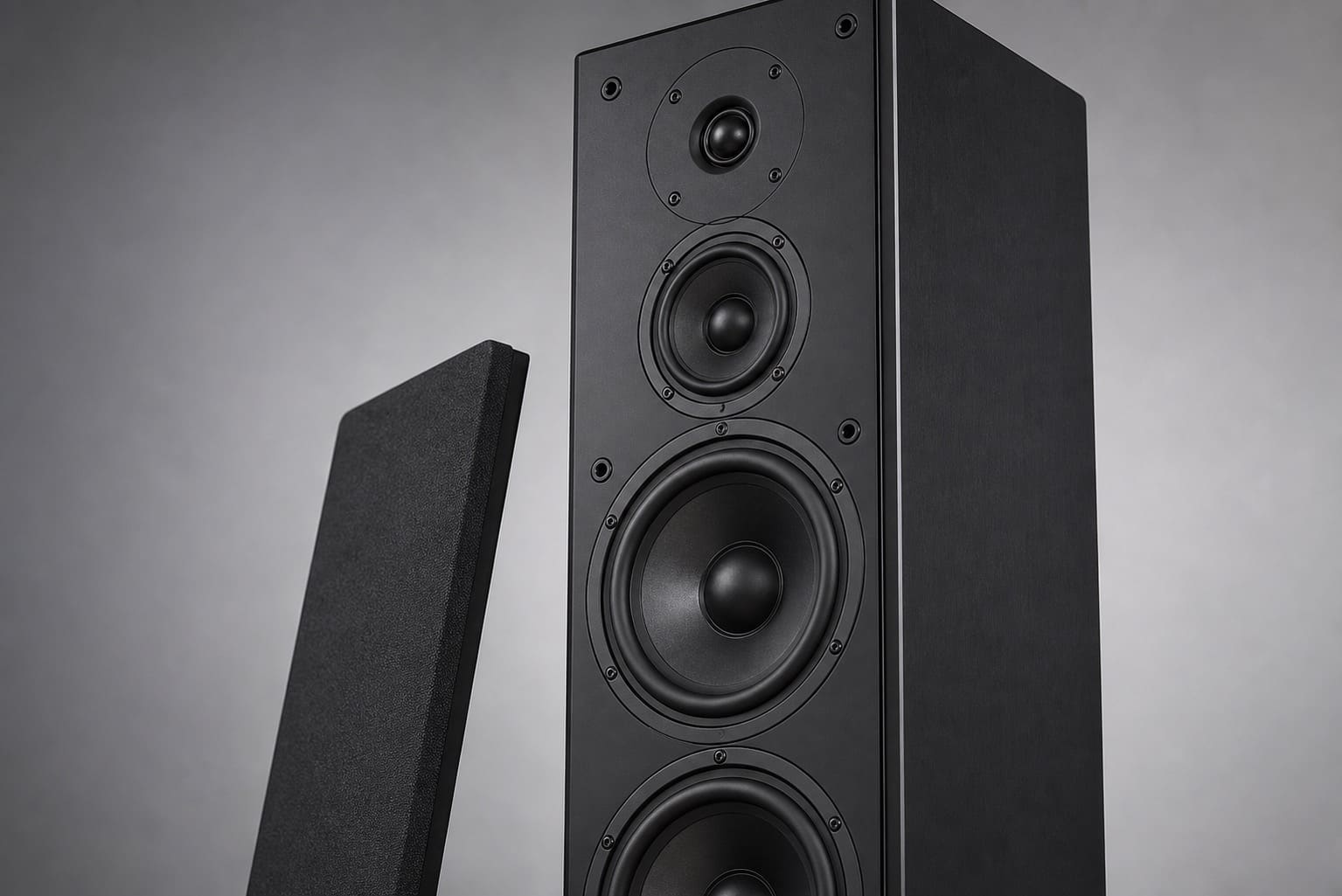
Tower speaker performance depends on the relationship between drivers, cabinet volume, crossover points, impedance behavior, and baffle layout. Audecy can support component selection and engineering reviews so the system works as a complete speaker rather than a set of isolated parts.
Prototype validation can include tonal-balance reviews, frequency-response checks, distortion checks, channel matching, and listening evaluations. The learnings feed back into crossover values, damping, port treatment, and assembly tolerances.
- Woofer, midrange, and tweeter matching for the intended configuration
- Crossover planning for tonal balance, impedance, protection, and consistency
- Terminal, wiring, and internal-routing design for stable assembly
- Acoustic validation for frequency response, channel matching, and distortion
Production And Finish
Premium appearance maintained across batches
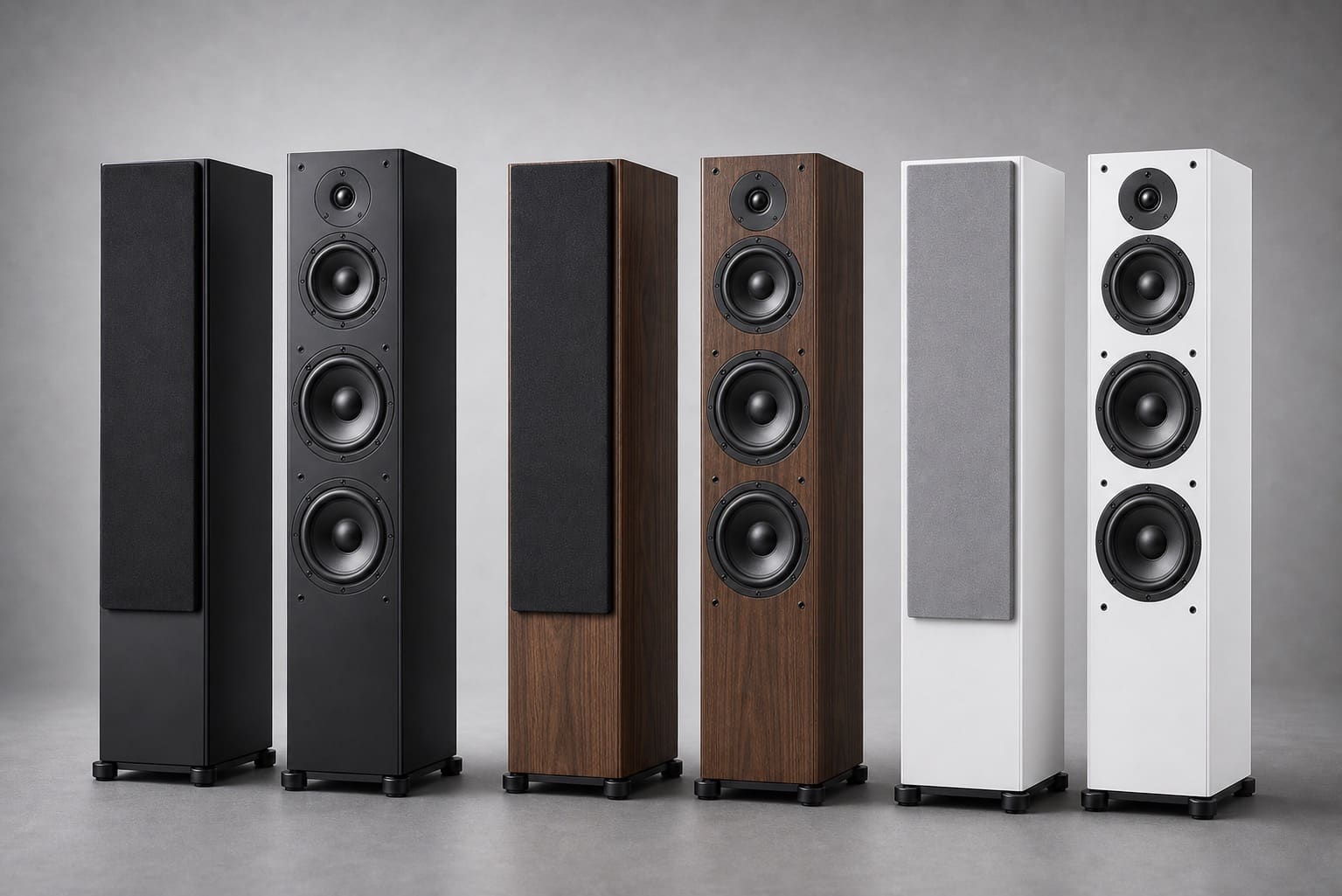
Tower speakers are large enough that small cosmetic issues are easy to notice. Audecy's production workflow can include checks for edge alignment, grille fit, terminal placement, cabinet finish, foot stability, driver seating, and packaging protection.
Final validation connects appearance with performance: cabinets need to look consistent, withstand transport, and meet the acoustic and functional requirements defined during development.
- Driver seating, screw torque, grille alignment, and terminal inspection
- Cabinet finish checks for color, gloss, texture, edge quality, and surface defects
- Transport and packing reviews for tall cabinet protection
- Final acoustic and functional checks before finished goods are released
Production workflow
From product brief to packed finished goods
Acoustic and cabinet target
Define the speaker configuration, output expectation, cabinet size, finish direction, driver set, and target buyer segment.
Prototype and tuning
Develop cabinet geometry, driver placement, crossover behavior, damping, port tuning, and finish samples.
Pilot assembly
Validate cabinet fabrication, driver mounting, wiring, terminals, grille fit, feet, packaging, and inspection gates.
Production and final QA
Run controlled assembly with cosmetic review, acoustic measurement, channel matching, packing checks, and release documentation.
Quality validation
Checks that matter before shipment
Each product category has its own risk areas, so validation is planned around the acoustic, electrical, mechanical, cosmetic, and packing requirements of the program.
- Cabinet resonance, fit, alignment, finish, and stability checks.
- Driver polarity, wiring, terminal, and crossover validation.
- Frequency-response, distortion, channel-matching, and SPL measurement.
- Grille, feet, trim, edge, and surface-finish inspection.
- Packing drop-readiness and transit-protection checks for tall cabinets.
Product customization
Adapt the platform to your brand and market
Cabinet architecture
2-way or 3-way layouts, dual-woofer designs, port placement, cabinet height, baffle width, and internal bracing.
Exterior finish
Wood-look finishes, painted cabinets, gloss treatments, fabric or metal grilles, feet, trim, and terminal layout.
Sound signature
Warm, balanced, bass-forward, vocal-focused, or room-filling tuning directions for different buyer segments.
FAQs
Tower Speakers manufacturing — common questions
What tower speaker configurations does Audecy build?
Floor-standing programs can be developed in 2-way and 3-way layouts, including dual-woofer designs, with cabinet size, port tuning, and finish planned around the target acoustic profile.
How are drivers and crossovers matched for tower speakers?
Woofer, midrange, and tweeter selection, crossover planning, impedance behavior, and baffle layout are engineered together, then validated with frequency-response, distortion, and channel-matching checks.
Can Audecy manufacture floor-standing speaker systems for premium ranges?
Yes. Audecy supports floor-standing speaker programs with tall cabinet construction, driver and crossover planning, acoustic tuning, premium grille and finish options, private-label branding, and packing designed for large enclosures.
Do you offer private-label tower speakers with premium finishes?
Yes. Audecy supports ODM, OEM, and private-label tower programs with wood-look, painted, or gloss cabinets, grille and trim options, and your branding for premium retail positioning.
How are tall cabinets protected during transport?
Packaging and transit protection are reviewed for large enclosures, alongside cabinet finish, grille fit, terminal, and driver-seating inspection before finished goods are released.
Related home audio programs
Explore adjacent product capabilities
Every tower speaker program is supported by our audio product development, manufacturing and assembly, and quality assurance capabilities.
Ready to discuss a tower speaker program?
Share the product target, feature mix, output expectations, finish direction, and launch timeline. Audecy can help translate the brief into a manufacturable plan.